Saturday, June 10, 2006

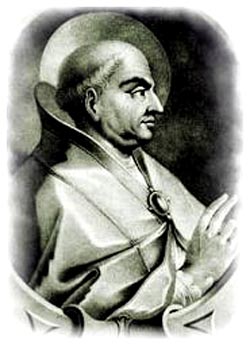
Saint Peter Damian


Peter Damian was born at Ravenna, in Italy. His parents died when he was a child and he was left an orphan. He went to live with an older brother who treated him badly. He often left him hungry and starving and made him look after his herd of swine to earn his keep. Another brother named Damian found out about the trouble little Peter was having and brought him to his own home.

That was when Peter's life changed completely. He was treated with love, affection and care. He was so grateful that when he became joined a religious order he took the name Damian after his loving brother. Damian educated Peter and encouraged his studies. Peter later became a great teacher and taught at the university while he was in his twenties. But the Lord was directing him in ways he could never have thought of.

Peter lived in times when many people in the Church were more interested in collecting wealth. Peter realized that the Church is divine and has the grace from Jesus to save all people. He wanted the Church to shine with the holiness of Jesus.

After seven years of teaching, he decided to become a Benedictine monk. He wanted to live the rest of his life in prayer and penance. He would pray and make sacrifices so that many people in the Church would become holy. His health suffered when he tried to replace sleep with prayer.
He went to a monastery of St. Romuald and wrote a rule for the monks. He also wrote about the life of their holy founder, Romuald. Peter wrote many books about religious studies to help people deepen their faith.


Twice his abbot sent him to neighboring monasteries so he could help the monks change their lives so that they could live closer to God. The monks were grateful because Peter was so kind and respectful.

Peter was finally called away from the monastery. He became a bishop and a cardinal. He was sent on very important missions for various popes throughout his long life. Peter Damian died in 1072 at the age of sixty-five. Because he was a champion of truth and a peacemaker, he was declared a Doctor of the Church in 1828. We celebrate his feast day on February 21 st.

Wednesday, June 07, 2006

Saint Martin


Martin was born in Tuscany, Italy. He grew up with a very good education and became a priest in Rome. In the year 649 he became pope. During that time people began arguing over the truths about Jesus and Pope Martin called a meeting of bishops. This meeting was named the Council of the Lateran. It clearly explained some of the beliefs and truths of the Catholic faith. Pope Martin knew the Council's explanations were true and it was his duty as pope to teach people the truth.

Some powerful Christians were not pleased about it. One such person was Emperor Constans II of Constantinople. He sent his soldiers to Rome to capture Martin and bring him to Constantinople. The soldiers kidnapped the Pope.

They took him right out of the Lateran Cathedral and smuggled him onto a ship. Pope Martin got sick, but they continued their journey. In October, 653, he was put in jail in Constantinople for three months. He was given only a little food and water each day. He wasn't even allowed to wash himself.

Pope Martin was put on trial and condemned to death. But then he was sent back to the same prison for three more months. Patriarch Paul of Constantinople pleaded for the pope's life. So instead of death, the pope was exiled and sent away from Italy. Pope Martin was put on a ship that took him across the Black Sea. In April, 654, it landed on the Russian peninsula called the Crimea.

Pope Martin was shocked at the suffering he was put through by those who were in charge of him. He wrote his own life story of those sad days. The pope said that he felt very sad to be forgotten by his relatives and members of the Church in Rome.

He knew they were afraid of the emperor. But at least, he said, they could have sent supplies of corn, oil and other basic needs. But they did not. They abandoned the pope because of fear.


The pope's exile lasted two years. He died around 656. Because of his terrible sufferings, he was proclaimed a martyr. He is the last of the popes so far to be considered a martyr. His feast day is April 13 th.

Monday, June 05, 2006

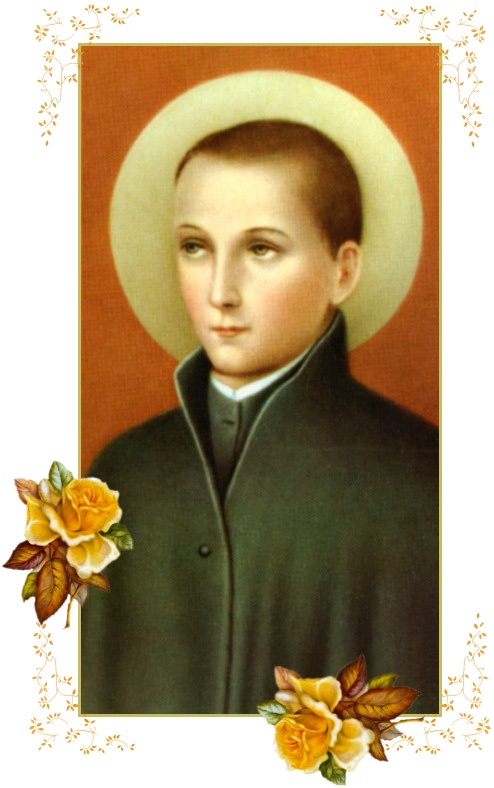
Saint John Berchmans

John was born at Driest, Brabant in Belgium. He was one of five children and the son of a shoemaker. His parents brought their five children up with much care and love, three of their children entered the religious life.

As a child, John stayed very close to his sick mother. Still, he liked to join with his young friends in putting on plays about Bible stories. He was especially good at playing the part of Daniel defending the innocent Susanna.

From the age of seven he formed the habit of rising early and would serve at two or three Masses with great eagerness. He once said, "If I do not become a saint when I am young, I shall never become one."

By the time he was thirteen, he wanted to begin studying for the priesthood. However, his father, needed his help in supporting the family. Finally, Mr. Berchmans decided to let John become a servant in the household of a priest. From there he could go to classes in the seminary.

Three years later, John Berchmans entered the Society of Jesus. He prayed, studied hard, and enthusiastically acted out parts in religious plays.

He made a motto: "Have great care for little things," and he lived up to it. St. John Berchmans never did any great or heroic things during his life. But he did every little thing well and for the love of God, from waiting on tables to copying down notes on his studies.

He was known as the saint who performed ordinary actions with extraordinary perfection. Kindness, courtesy and constant fidelity were an important part of his holiness.

When his was in his third year of college doing philosophy, he was asked to participate in a public debate, defending the Catholic faith, at a Greek college. He spoke with great confidence and knowledge on the subject.

But when he returned to his own college after the debate, he became sick with a violent fever and no doctor could discover what illness he had. John knew he was going to die.

He was very cheerful as always. When the doctor ordered that his forehead be bathed with wine, John joked: "It's lucky that such an expensive sickness is not going to last long."

John did not live to become a priest he died in 1621 at twenty-two but he had without any doubt, reached his goal of holiness. He died clutching his rosary, crucifix and rules of his order in his hands. Miracles took place at his funeral. Right away people began to call him a saint.